Table of Contents
- A Typical Lawn Fertilization Schedule in Indiana
- Why One Fertilizer Treatment Is Usually Not Enough
- What Can Change the Number of Lawn Treatments You Need?
- Fertilization and Weed Control Should Work Together
- When Aeration and Overseeding May Help
- Does Your Lawn Also Need Grub Control?
- Signs Your Lawn May Need a Better Fertilization Plan
- Get the Right Lawn Fertilization Schedule for Your Property
Most Indiana lawns benefit from five to six fertilizer treatments per year. A consistent lawn fertilization schedule helps cool-season grass stay greener in spring, handle summer stress, and build stronger roots before winter. The right number of treatments can vary depending on weeds, soil conditions, pest pressure, and your lawn’s current health.
Rather than applying fertilizer all at once, treatments should be spaced throughout the growing season. This provides your grass with nutrients when it needs them most, without encouraging unnecessary growth at the wrong time. For homeowners in Elkhart and Northern Indiana, a professionally managed plan can also adjust treatment timing around weather and lawn conditions.
A Typical Lawn Fertilization Schedule in Indiana
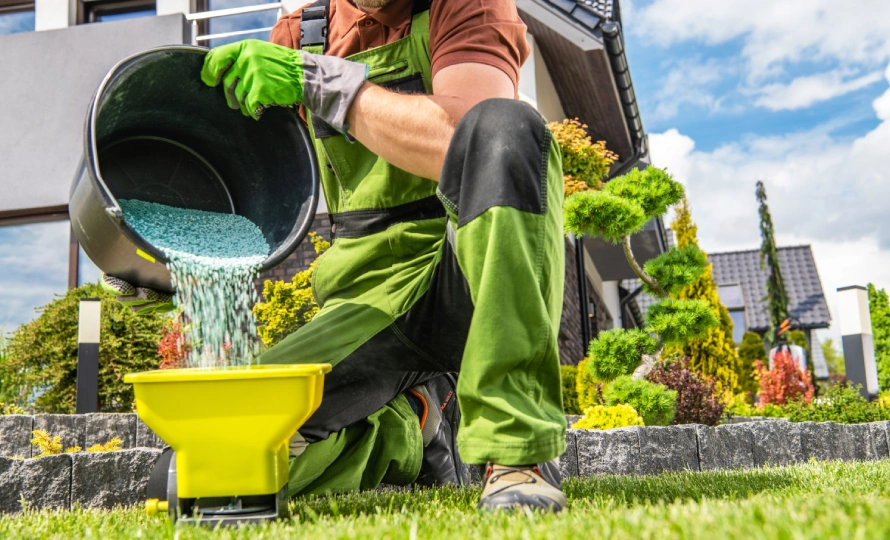
Most lawn fertilizer applications in Elkhart begin in spring and continue through late fall. Each treatment serves a different purpose, from supporting early green-up to strengthening roots before winter. A six-step lawn treatment program is often a strong option for homeowners who want consistent seasonal care.
| Time of Year | Main Focus | How It Helps Your Lawn |
| Early Spring | Fertilizer and pre-emergent weed prevention | Supports spring green-up and helps prevent annual weeds such as crabgrass |
| Late Spring | Fertilizer and broadleaf weed control | Encourages thicker growth and controls common weeds before summer |
| Early Summer | Nutrient support and weed control | Maintains color and density as temperatures begin to rise |
| Mid to Late Summer | Stress support and lawn monitoring | Helps turf handle heat, dry conditions, and seasonal weed pressure |
| Early Fall | Root growth and lawn recovery | Helps grass recover from summer and prepares thin areas for overseeding |
| Late Fall | Winterizer fertilizer treatment | Builds stronger roots and stores energy for spring green-up |
Why One Fertilizer Treatment Is Usually Not Enough
One fertilizer application may improve lawn color for a short time, but it does not provide the full-season support Indiana grass needs. Your lawn faces different challenges in spring, summer, and fall, so its nutrient needs change throughout the year. Spacing lawn treatments across the season supports steadier growth, stronger roots, and more consistent color.
A well-planned program can also help your lawn compete with weeds and recover from seasonal stress. Thick turf leaves fewer open areas where weeds can take hold. Regular treatments work best when they are paired with proper mowing, watering, and soil care.
What Can Change the Number of Lawn Treatments You Need?
Not every lawn needs the exact same treatment schedule. A healthy, established lawn may only need routine seasonal applications, while thin or stressed turf may need more focused support. The best plan depends on the condition of your grass, soil, and growing environment.
Your lawn may need a more customized fertilization plan when it has:
- Thin, bare, or uneven areas
- Heavy weed growth or recurring crabgrass
- Compacted soil that limits nutrient absorption
- Summer drought stress or poor irrigation coverage
- A history of grub damage or other lawn pests
- Heavy shade, foot traffic, or pet activity
- Weak turf that does not recover well after summer
Fertilization and Weed Control Should Work Together
Fertilizer feeds your grass, while weed control helps protect the space your grass needs to fill. Weeds compete with turf for sunlight, water, and nutrients, which can make a lawn look thin even when it receives fertilizer. Combining both services gives your desirable grass a better chance to grow thick and healthy.
A professional lawn treatment program can address seasonal weeds while keeping fertilization on schedule. This helps reduce the need for reactive treatments later in the year. It also supports a more consistent lawn appearance from spring through fall.
When Aeration and Overseeding May Help
Fertilizer helps existing grass grow stronger, but it cannot always correct compacted soil or fill in major thin spots on its own. Fall is often a good time to pair fertilization with aeration and overseeding because cooler conditions support root development. Aeration allows water, oxygen, and nutrients to move deeper into the soil where grass roots can use them.
Aeration and overseeding may be helpful when your lawn has:
- Hard or compacted soil
- Thin grass in high-traffic areas
- Bare spots after summer stress
- Patchy growth caused by poor soil conditions
- Grass that does not respond well to regular fertilizer treatments
Does Your Lawn Also Need Grub Control?
Grubs can damage your lawn by feeding on grass roots below the surface. As root damage spreads, turf may turn brown, feel loose, or pull up easily from the soil. Fertilizer can help your lawn recover after damage, but it will not eliminate an active grub problem.
Preventive grub control may be a good addition for properties with a history of grub activity or visible beetle pressure. Treating before damage becomes severe can help protect the root system that keeps your lawn healthy. Our team can assess your property and recommend whether grub control should be part of your lawn care plan.
Signs Your Lawn May Need a Better Fertilization Plan
A lawn that is not receiving the right nutrients at the right time may struggle throughout the growing season. However, yellowing, thin growth, and brown patches can also be caused by weeds, pests, compaction, disease, or watering issues. Looking at the full condition of your lawn is more useful than simply applying extra fertilizer.
Watch for these common signs:
- Pale or yellow grass during active growing periods
- Thin turf that does not fill in well
- Weeds spreading through open areas
- Uneven color across the lawn
- Weak recovery after heat, drought, or foot traffic
- Brown patches that may point to pests or root damage
Get the Right Lawn Fertilization Schedule for Your Property
Most homeowners should plan for five to six lawn treatments per year to support steady growth and stronger roots. The right schedule should account for your lawn’s current condition, the time of year, weed activity, and whether services such as aeration or grub control are needed. A tailored plan takes the guesswork out of how often to fertilize a lawn in Indiana.
Grow Pros Lawn Care provides lawn fertilization and weed control programs for homeowners in Elkhart, South Bend, and the surrounding Michiana area. We can evaluate your lawn and recommend a treatment schedule that fits its specific needs. Contact us today to request your free lawn care consultation.