Table of Contents
Aeration and proper winter lawn preparation work together to give your grass a better start the following spring. For homeowners in Elkhart County, fall core aeration can relieve compacted soil and improve access to air, water, and nutrients before colder weather slows lawn growth.
Winterizing a lawn is not limited to one treatment. It is the overall process of preparing the turf and soil for winter, and aeration can be one of the most valuable steps in that process.
Why Aeration Should Be Part of Your Fall Lawn Prep
After a full season of mowing, foot traffic, summer heat, and regular use, soil can become tightly compacted. That makes it harder for grass roots to access the water, oxygen, and nutrients they need.
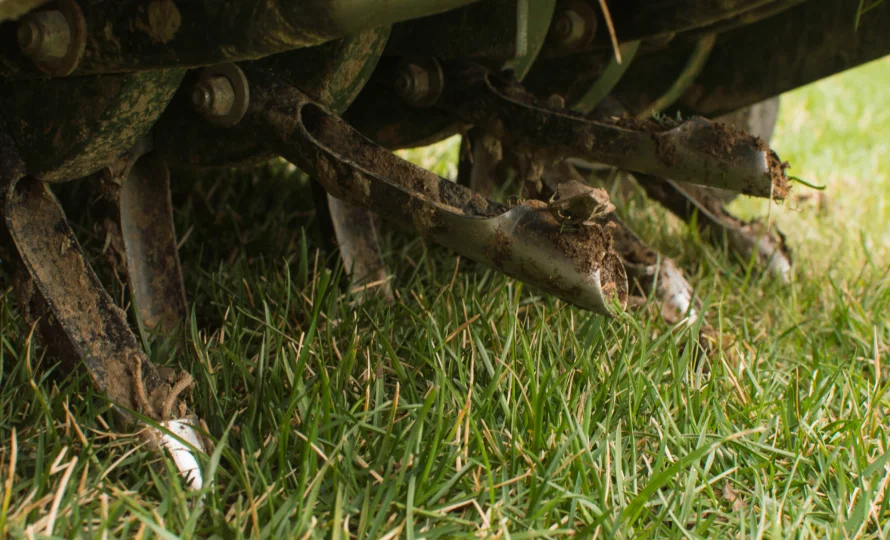
Core aeration removes small plugs of soil throughout the lawn, creating openings that relieve compaction and improve conditions around the roots. Performing this work in fall gives cool-season turf an opportunity to recover before winter arrives.
Fall aeration can help:
- Reduce soil compaction
- Improve water absorption
- Increase airflow around roots
- Support deeper root development
- Improve nutrient movement
- Prepare thin turf for overseeding
What Does Winterizing a Lawn Really Mean?
Winterizing simply means preparing your lawn for the colder months ahead. Instead of relying on one single treatment, homeowners should focus on several fall maintenance practices that protect turf conditions and reduce unnecessary stress.
A basic winter lawn preparation plan may include:
| Fall Task | Why It Matters |
| Core Aeration | Relieves compaction and improves root-zone conditions |
| Final Mowing | Keeps grass manageable without leaving it excessively tall |
| Leaf Removal | Prevents heavy leaf cover from blocking sunlight and airflow |
| Proper Watering | Helps prevent unnecessary drought stress before freezing temperatures |
| Overseeding When Needed | Helps improve thin areas while growing conditions are favorable |
Among these tasks, core aeration directly addresses what is happening beneath the surface, which is why it can play such an important role in fall lawn preparation.
Compacted Soil Can Make Winter Stress Worse
Compacted soil limits the open spaces that allow air and water to move through the root zone. When roots cannot spread effectively, grass may be less prepared to handle seasonal stress.
You may notice compaction through symptoms such as:
- Thin or patchy turf
- Hard soil underfoot
- Water pooling after rain
- Slow absorption during watering
- Weak growth in high-traffic areas
- Grass that struggles to recover after summer
Aeration helps improve the growing environment before winter rather than waiting until visible problems become worse in spring.
How Aeration Supports a Healthier Spring Lawn
One of the biggest benefits of fall aeration is what it can do for the next growing season. By improving soil conditions before winter, you give the lawn a better foundation for renewed growth once temperatures begin warming again.
Aeration can help the lawn:
- Develop a stronger root system
- Make better use of available moisture
- Absorb nutrients more effectively
- Recover from summer stress
- Establish thicker turf when paired with overseeding
It does not guarantee a perfect spring lawn, but it addresses several common soil problems that can limit healthy turf development.
Pair Aeration With Overseeding When the Lawn Is Thin
Fall is also a good opportunity to address thin or bare areas. Core aeration creates openings in the soil that can improve seed-to-soil contact when overseeding is performed at the same time.
Instead of seed sitting only on top of compacted soil, some of it can settle into the openings created during aeration. That can create more favorable conditions for germination and help improve lawn density.
Don’t Forget the Rest of Your Winter Lawn Prep
Aeration is important, but it works best as part of a broader fall maintenance routine. Once aeration is complete, homeowners should continue caring for the lawn until seasonal growth slows.
Before winter, make sure to:
- Keep mowing as needed. Continue mowing while the grass is actively growing rather than stopping simply because fall has arrived.
- Remove heavy leaf buildup. Thick leaf cover can block light and hold excess moisture against the turf.
- Avoid unnecessary traffic. Repeated use of wet or stressed areas can contribute to additional compaction.
- Monitor moisture levels. Turf can still experience dry conditions during fall, especially during extended periods without rainfall.
- Address thin areas early. If overseeding is appropriate, give new grass enough time to establish before colder weather settles in.
These simple steps, combined with aeration, can help the lawn enter winter in better condition.
When Should You Aerate in Northern Indiana?
For cool-season lawns in Northern Indiana, fall is generally one of the best periods for core aeration because the grass is actively growing while temperatures are becoming more moderate. The lawn still has time to recover before winter dormancy.
The best timing can vary based on soil moisture, grass condition, recent weather, and whether overseeding is planned. Aerating soil that is slightly moist rather than extremely dry or saturated also allows the equipment to pull more effective soil cores.
Start Preparing Your Elkhart County Lawn Before Winter
Grow Pros Lawn Care provides professional core aeration for homeowners throughout Elkhart and surrounding Michiana communities. Our aeration services help relieve compacted soil and improve the conditions your lawn needs as it heads into winter and prepares for another growing season.
Contact us today to schedule fall lawn aeration in Elkhart County. Our team can help improve compacted soil and give your lawn a stronger foundation heading into winter and spring.