Table of Contents
- What Are White Grubs in Northern Indiana Lawns?
- Common Signs of Grub Damage in a Lawn
- Why Grub Damage Gets Worse So Quickly
- Best Grub Treatment Timing in Indiana
- Preventive Grub Control vs. Curative Grub Treatment
- What Really Works for Lawn Grubs in Elkhart?
- Why Professional Grub Control Is Worth It
- How to Help Your Lawn Recover After Grub Damage
- Stop Grub Damage Before It Takes Over
Grub control in Indiana is most effective when treatment happens before lawn damage spreads. In Northern Indiana, white grubs can feed on grass roots and leave behind brown, loose, weak patches that may look like drought stress at first. For homeowners in Elkhart, South Bend, Granger, Mishawaka, and nearby areas, knowing the signs early can help protect the lawn before the damage gets worse.
White grubs are the larvae of beetles, including Japanese beetles, June beetles, and chafer beetles. They live underground and feed on turf roots, which makes the grass lose its connection to the ground. Once the roots are damaged, the lawn may thin out, turn brown, or peel back like loose carpet.
What Are White Grubs in Northern Indiana Lawns?
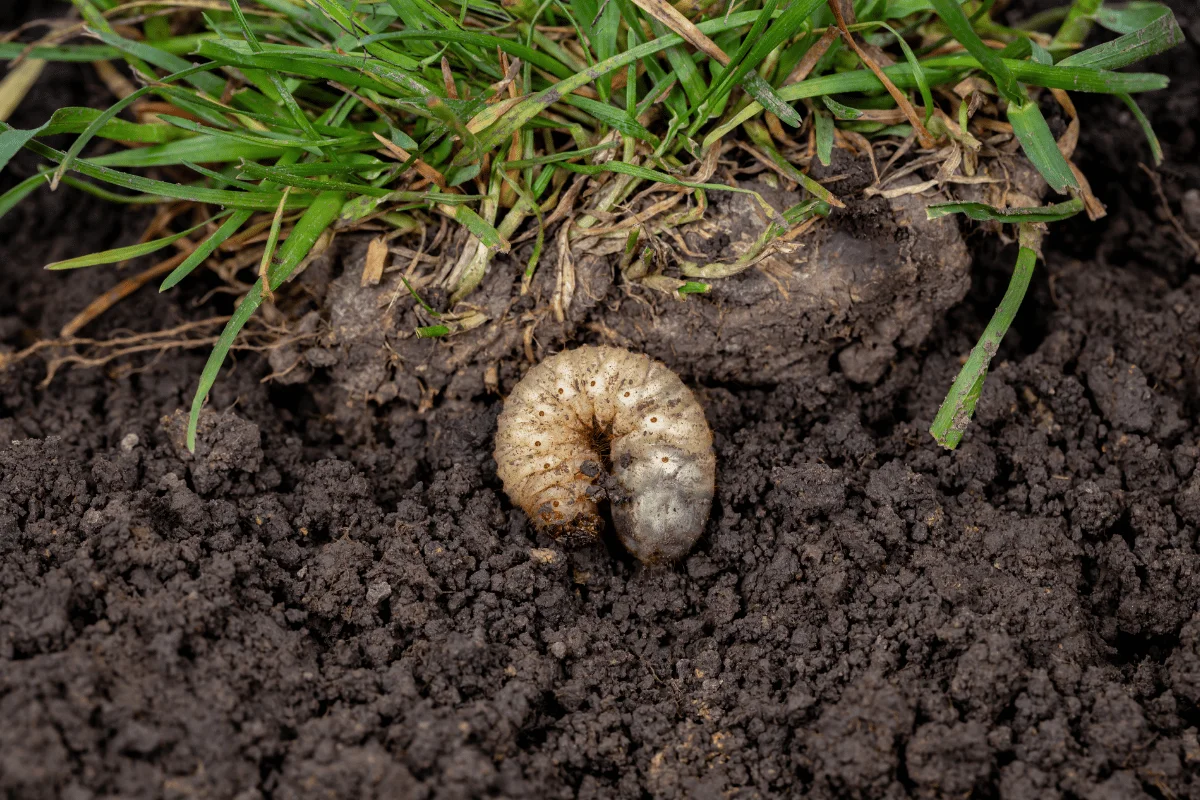
White grubs are small, C-shaped larvae that usually have cream-colored bodies and brown heads. They stay below the soil surface, so many homeowners do not notice them until the lawn begins to show damage. In many cases, the visible lawn problem appears after the grubs have already been feeding for a while.
Japanese beetle grubs in lawn areas are a common concern because they can damage turf during their feeding stage. Adult beetles lay eggs in the soil, and those eggs hatch into grubs that feed on grass roots. This cycle makes timing one of the most important parts of any grub control plan.
Common Signs of Grub Damage in a Lawn
Grub damage lawn identification starts with looking for changes in turf strength, color, and root hold. Brown patches do not always mean grubs, but weak turf that lifts easily can be a strong warning sign. The best way to confirm the issue is to inspect the soil under the damaged area.
Common signs of lawn grubs include:
- Brown or thinning patches that keep spreading
- Grass that feels loose, soft, or spongy underfoot
- Turf that pulls up easily because the roots are gone
- Birds, skunks, raccoons, or other animals digging in the lawn
- Visible white, C-shaped grubs under the soil
- Lawn damage that appears in late summer or early fall
Why Grub Damage Gets Worse So Quickly
Grub damage can spread quickly because the insects attack the roots, not the grass blades. A lawn may look stressed on the surface while the real damage is occurring beneath the surface. By the time large brown patches appear, the root system may already be weak.
This is why watering alone does not fix a grub problem. If grubs are eating the roots, the grass cannot absorb water and nutrients the way it should. A professional inspection can help determine whether the lawn needs grub treatment, repair, or both.
Best Grub Treatment Timing in Indiana
Grub treatment timing in Indiana depends on the stage of the grubs’ life cycle. Preventive grub control usually works best before heavy root feeding begins. In Northern Indiana, this often means treatment is planned in late spring through summer, depending on weather, soil conditions, and the product used.
Curative treatments may be needed when active grubs are already causing damage. These treatments work differently from preventive applications and are usually more time-sensitive. Once grubs become larger or move deeper into the soil, treatment can become less effective.
Preventive Grub Control vs. Curative Grub Treatment
Preventive grub control is designed to stop young grubs before they cause major lawn damage. This is often the best option for lawns with a history of grub problems, Japanese beetle activity, or recurring late-season brown patches. Preventive treatments help protect the lawn before the damage becomes obvious.
Curative grub treatment targets active grubs that are already feeding. This can help stop further damage, but it may not fully repair grass that has already lost its roots. In those cases, the lawn may also need aeration, overseeding, fertilization, or other recovery work.
What Really Works for Lawn Grubs in Elkhart?
The best grub control service near me should begin with a proper lawn inspection. Treating every brown patch as a grub problem can waste time and money because drought stress, fungus, compaction, and poor soil can cause similar symptoms. A good treatment plan starts by confirming whether grubs are actually present.
What really works is a combination of timing, product selection, and lawn health. Healthy turf can tolerate minor pest pressure better than weak, thin grass. That is why grub control often works best as part of a full lawn care program instead of a one-time emergency fix.
Why Professional Grub Control Is Worth It
Professional grub control helps remove the guesswork from lawn treatment. A trained lawn care team can identify the signs, check the soil, choose the right timing, and apply treatment correctly. This is especially helpful in Northern Indiana, where weather patterns can shift treatment windows from year to year.
Grow Pros Lawn Care provides professional lawn treatment services for homeowners in Elkhart and the Michiana area. The team focuses on science-backed lawn care, pest control, fertilization, weed control, aeration, and other services that support healthier turf. For lawns with grub activity, a professional plan can help stop damage and support stronger recovery.
How to Help Your Lawn Recover After Grub Damage
A lawn damaged by grubs may need more than pest treatment. Once the grubs are controlled, the turf still needs help to rebuild roots and fill thin areas. Recovery depends on how much grass survived and how badly the root system was damaged.
Helpful recovery steps may include:
- Raking out dead or loose turf
- Improving soil contact for new seed
- Aerating compacted areas
- Overseeding thin or bare spots
- Applying the right fertilizer at the right time
- Watering newly seeded areas properly
Stop Grub Damage Before It Takes Over
Lawn grubs in Elkhart and Northern Indiana can cause serious damage if left untreated. The best results come from early identification, smart treatment timing, and a lawn care plan that supports stronger turf. If you see brown patches, loose grass, or animal digging in your yard, contact us today to schedule a grub control inspection and protect your lawn before the damage spreads.